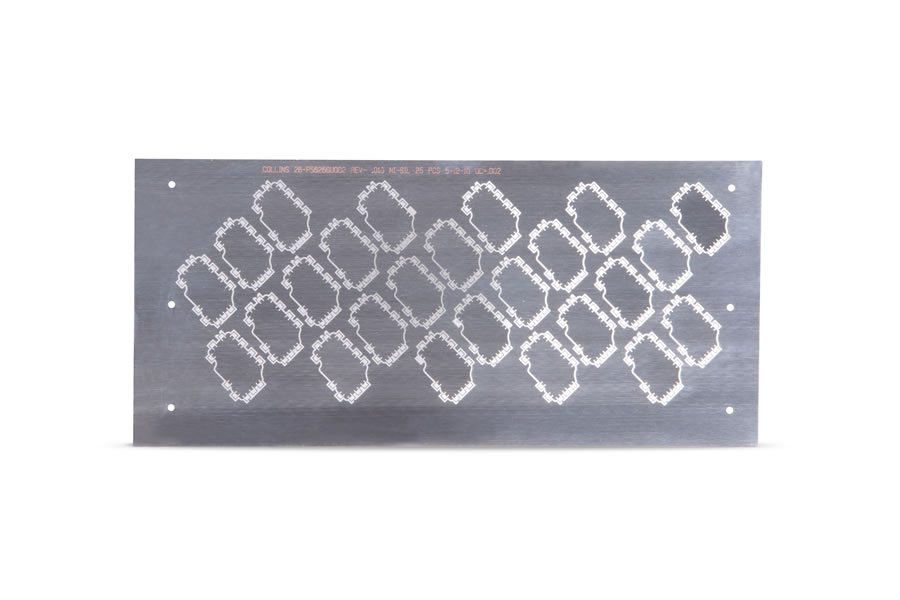
Process Overview
Photo chemical etching produces highly precise parts that would be difficult or impossible to make with conventional fabrication methods — a technology first used commercially during World War II to produce gun sight reticles. Since then, it has become a vital manufacturing process behind components found in aircraft avionics, medical devices, and electronics.
The guidelines below describe the typical capabilities and limitations of the process, not the absolute limits of what chemical etching can achieve. Contact us to discuss your specific requirements.
The Photo-Chemical Etching Process
- Generate artwork on mylar from the Mech-Tronics CAD system or customer-supplied data.
- Clean and pre-treat the material.
- Apply 1.5 mil dry photo-resist mylar film to the metal sheet to be etched.
- Expose the film via UV light to transfer the piece part photographically to the treated sheet.
- Develop the image on the metal sheet to fix it in place.
- Chemically remove the unprotected areas by etching with the proper acid within an enclosed chamber.
- Rinse and strip the photo-resist film from the sheet.
- Proceed to next operations — forming, dip brazing, hardware insertion, silk screening, finishing, etc.